Ergonomics is often associated only with office chairs and desk height. In reality, poor ergonomics affects much more: concentration, physical strain, repetitive stress, discomfort, absenteeism, and long-term productivity. In laboratories, offices, and technical work environments alike, unsuitable workstation design and poorly structured routines can create avoidable risks that grow over time.
For many companies, the challenge is not recognizing that ergonomics matters. The real challenge is implementing improvements consistently and documenting occupational safety measures in a way that remains practical in daily operations.
This is where ergonomics consultancy and digital occupational safety tools work best together.

Ergonomics consultancy helps identify physical and organizational strain in the workplace. Workstations are reviewed, movement patterns are observed, and concrete recommendations are developed. These improvements may include better desk and chair adjustments, optimized workflows, more suitable workstation layouts, or changes to repetitive processes in laboratories, offices, and operational environments.
But identifying improvement opportunities is only one part of the solution.
Occupational safety also requires structure. Risk assessments, training records, follow-up actions, responsibilities, and deadlines must be managed in a way that remains clear and traceable over time. Without a structured system, even good ergonomic recommendations can be forgotten, delayed, or implemented inconsistently.
The FUTUROSALUD ASI Manager supports this operational side of occupational safety. It creates a clear framework for documenting responsibilities, managing tasks, maintaining oversight, and supporting traceable compliance processes in everyday work.
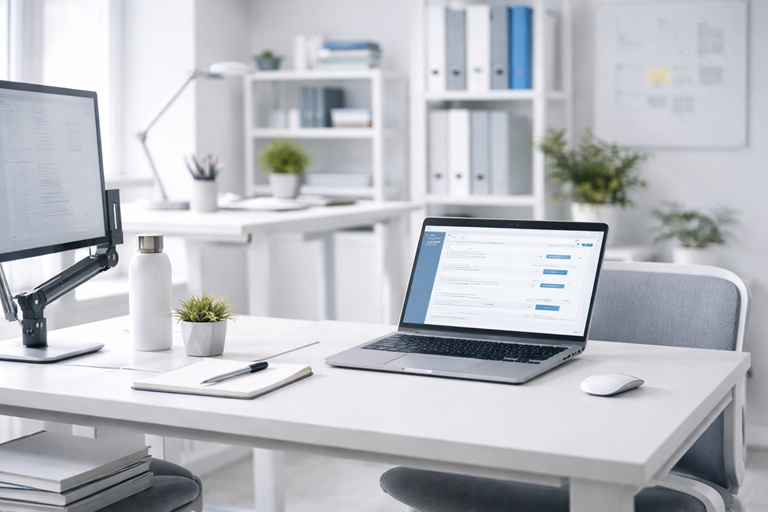
[IMAGE: close-up of laptop with structured software dashboard in soft red, grey, and blue tones, no readable text]
By combining ergonomics consultancy with the FUTUROSALUD ASI Manager, occupational safety becomes more than a series of isolated measures. It becomes a structured system that connects assessment, implementation, documentation, and follow-up.
This is especially valuable in growing companies, research environments, and dynamic teams where safety responsibilities must remain manageable without creating unnecessary administrative burden.
In practice, companies benefit from this combination in several ways:
- ergonomic risks are identified early
- improvements can be implemented more systematically
- tasks and follow-up actions remain visible
- documentation stays organized and traceable
- occupational safety becomes easier to manage across daily operations
For many businesses, this creates a major advantage: instead of reacting only when problems appear, they can build a clearer and more sustainable occupational safety structure from the start.
If your company also needs support with legal occupational safety obligations, external expertise can help translate requirements into practical implementation.
Read more about this here:
[LINK TO: external-safety-professional-startups]
If you want to understand the legal framework behind structured occupational safety documentation and responsibilities, continue here:
[LINK TO: section-6-asig-dguv-regulation-2-occupational-safety]
If your work environment includes research or laboratory activities, early occupational safety planning is especially important:
[LINK TO: occupational-safety-research-early-consultancy]
## Make Ergonomics and Occupational Safety Easier to Manage
We help companies combine practical ergonomics consultancy with structured digital occupational safety management. The result is a more transparent, more manageable, and more sustainable safety process in everyday work.
[BUTTON: Request your free safety assessment]