
Documentation and Traceability in Modern Business Operations
Why Verifiable Processes Are Becoming Increasingly Important
Today, companies are expected not only to implement processes and measures, but also to demonstrate how their organizational structures function and how responsibilities are assigned. The importance of traceable documentation continues to grow regardless of company size or industry.
Especially in regulated or operationally complex environments, problems often arise when processes are documented inconsistently or when implemented measures cannot be clearly reconstructed afterward. This affects not only safety and compliance topics, but also general organizational management.
Many businesses still operate with historically fragmented documentation systems. Information is spread across emails, spreadsheets, paper archives, and disconnected applications. Over time, this fragmentation can create organizational uncertainty and reduce operational control.
A structured documentation system therefore serves several purposes at once. It helps companies:
- create organizational transparency,
- clarify responsibilities,
- document measures and decisions,
- and stabilize internal workflows over the long term.
This is not only about meeting regulatory requirements. Structured documentation can also significantly improve internal organization. Companies gain better visibility into tasks, responsibilities, and ongoing operational processes.
This becomes particularly relevant for organizations with:
- multiple locations,
- international teams,
- digital work models,
- or complex administrative processes.
In such environments, centralized documentation and traceability systems become increasingly important.
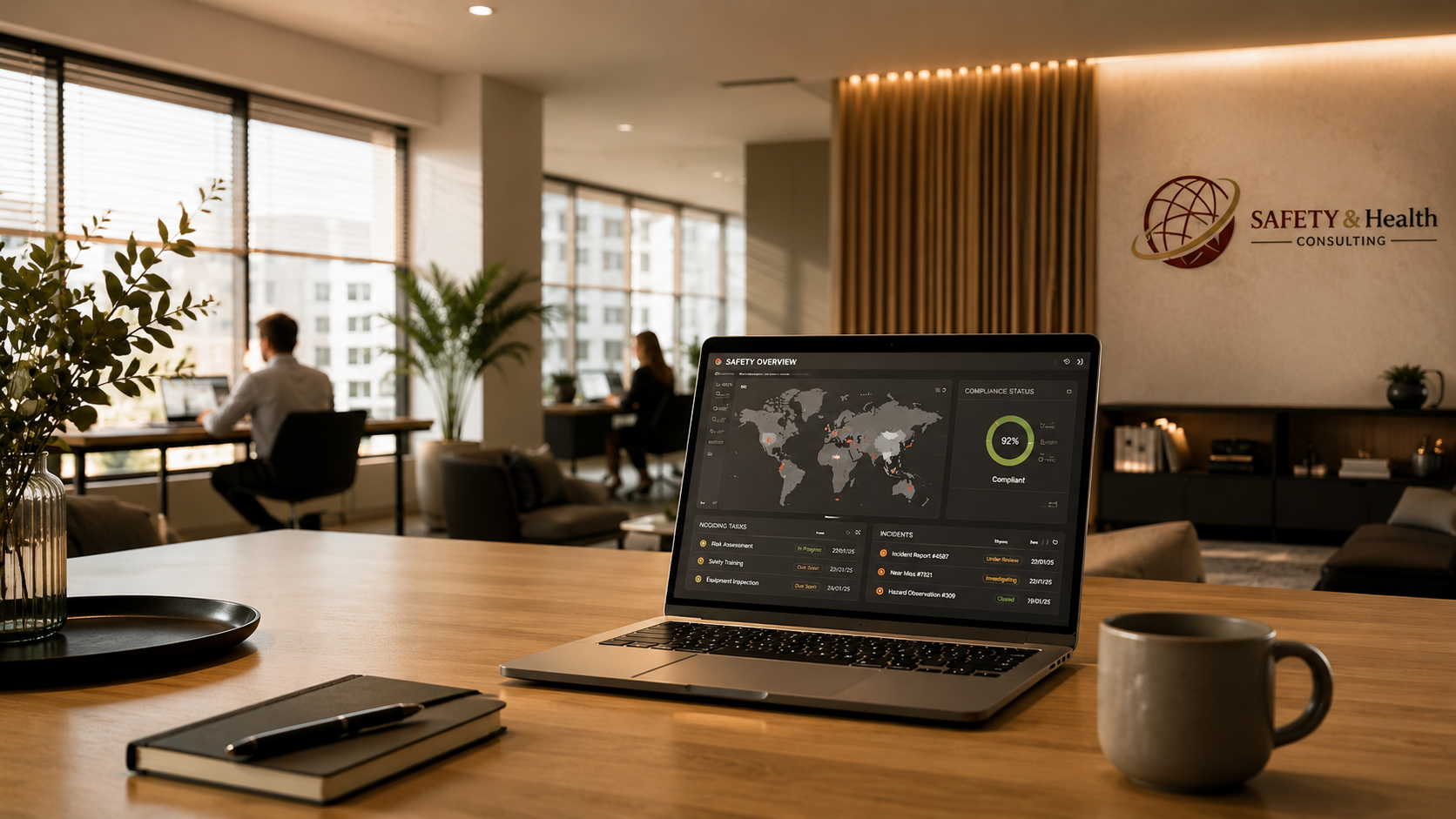
Modern digital systems can support these objectives by organizing information more clearly and improving process visibility. However, it remains essential that these systems themselves do not become unnecessarily complicated. Businesses do not need additional administrative burdens; they need systems that create structure and clarity.
In the long term, organizations benefit most from clearly defined operational standards. When processes are documented, responsibilities are traceable, and measures are recorded systematically, companies build a stronger and more stable organizational foundation.
The growing importance of traceability reflects a broader development in modern business management: organizational processes are becoming increasingly dependent on structured documentation and operational clarity. Companies that establish reliable systems early create better conditions for long-term stability, transparency, and organizational control.